
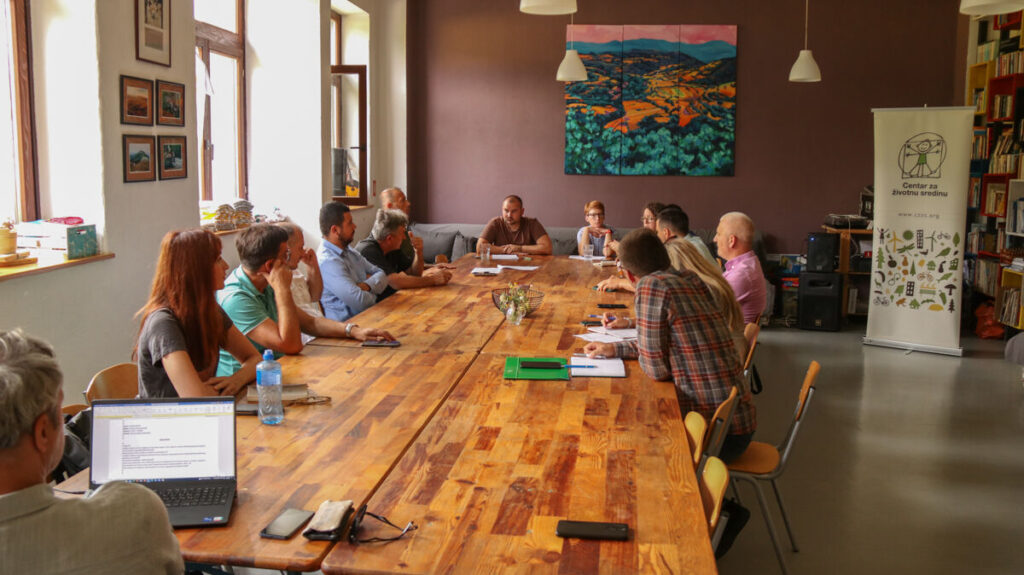
The area of the upper course of the Sana River and its Prizrenac Canyon, also known as Prizren-grad, should be protected. This was the message from a roundtable discussion held on Friday, August 18th, at the Pecka Visitor Center, organized by the Center for Environment. The meeting was attended by representatives of the municipalities of Ribnik and Mrkonjić Grad, representatives of associations from these areas, and representatives of the Republic Institute for the Protection of Cultural-Historical and Natural Heritage.

“The entire upper course of the Sana River is designated for protection, including the existing protected area ‘Vrela Sane.’ This area has been dramatically altered and disrupted by the construction of the Medna small hydroelectric power plant, preventing the creation of the planned nature park. Even after declaring the ‘Vrela Sane’ a natural monument in 2021, we have not given up on protecting the downstream section. We are now continuing with activities to preserve the other significant part of this area,” said Vladimir Topić, an assistant in the Energy and Climate Change program at the Center for Environment.
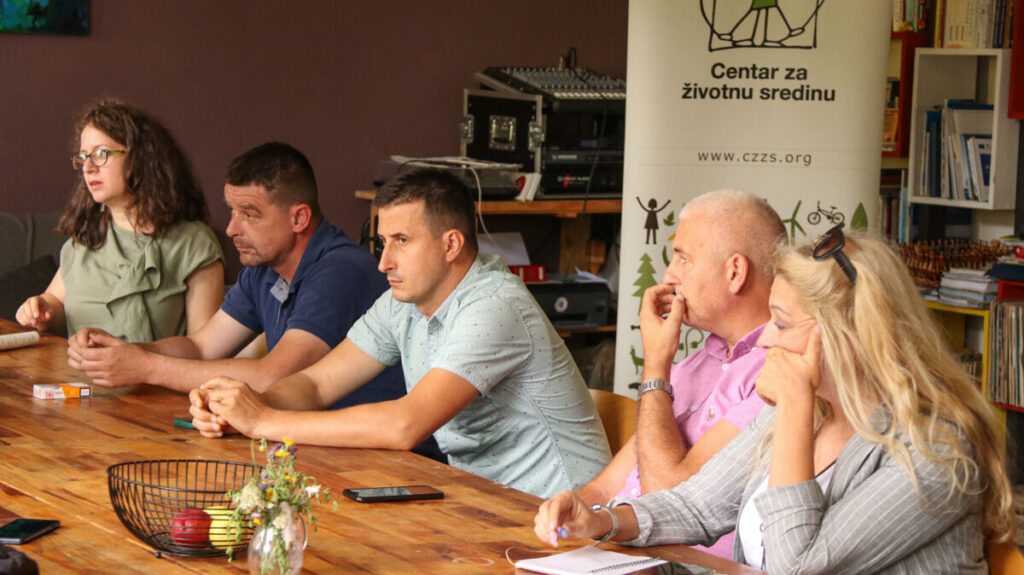
The goal of the meeting was to bring together interested parties to exchange information and viewpoints, reach conclusions regarding the possibilities and needs for further protection of this area. During the meeting, all potential obstacles and potentials related to the creation of this protected area were discussed. Furthermore, all participants were in agreement that this protection is necessary and voiced their support for it.
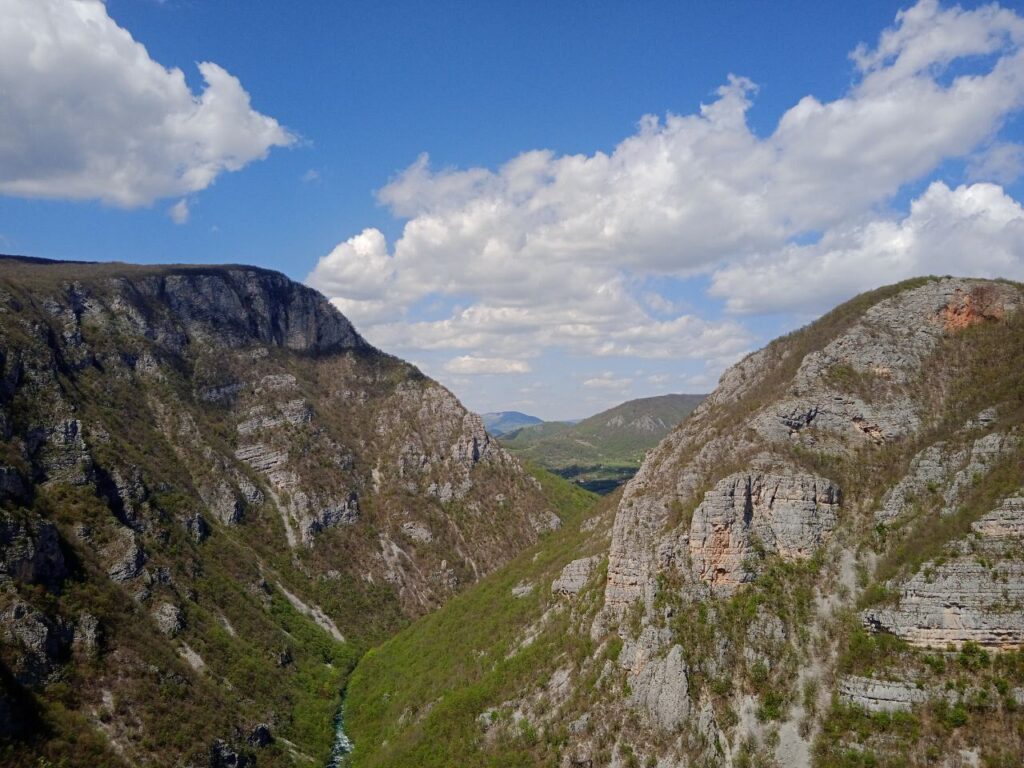
The Sana River and the Prizrenac Canyon represent an exceptional natural value that is crucial to protect. This area is characterised by hydrological, geomorphological, and biodiversity riches.
“In addition to being a water body of the highest quality, this area is home to many protected and endangered species. It also holds cultural significance, as it contains the remains of the medieval fortress Prizren-grad, after which the canyon is named. The Prizrenac Canyon is the habitat for numerous species, with particular emphasis on the huchen fish and the peregrine falcon. These findings have been discovered through scientific research organised in 2018, and we continue these efforts this year,” said Nataša Crnković, the coordinator of the Biodiversity and Protected Areas program at the Center for Environment.
Furthermore, there are several viewpoints on the cliffs of the canyon, such as Okomoljak and Sokolovača, which stands at an altitude of around 1000 meters. The canyon itself reaches heights of up to 400 metres at certain points. These viewpoints are highly attractive and have already been recognised and partly utilised by the Ribnik Tourist Organization.
One of the main concerns that could affect this area is the construction of fishponds or the concreting of the Sana River’s bed upstream from the protected area. It is essential for the authorities to prevent such activities near and within the riverbed.
Lazo Ćuso from the Sports Fishermen Association of Mrkonjić Grad mentioned that the plans of the private company Nives MB from Laktaši could potentially disrupt this area in the future.
“Based on the information we have, commercial fishing is planned, but more importantly, there are plans for concreting the bed of the Sana River, creating concrete pathways in the vicinity, and constructing fishponds. All of these activities would significantly harm the Sana River and the surrounding area, affecting water quality and, consequently, the habitat of many fish species,” Ćuso emphasised.
He also noted that the association has submitted a report about these activities and plans to continue addressing this issue because they want to prevent any negative consequences.
In addition to the active potential threat of imminent and irreversible damage through concreting the bed of the Sana River, the Medna Mine surface excavation represents a threat to this area. The Medna Mine has, on several occasions, led to water turbidity and the presence of heavy metals in the Grabovac watercourse, which later flows into the Medljanska River and, subsequently, into the Sana. These incidents should not occur even if the area was not planned for protection, therefore, on this occasion, we urge the relevant authorities to take responsibility for monitoring the mine’s operations. The roundtable discussion made it clear that preserving the Sana, its tributaries, habitats, and the establishment of a new protected area are a priority and necessity for the local community.


