
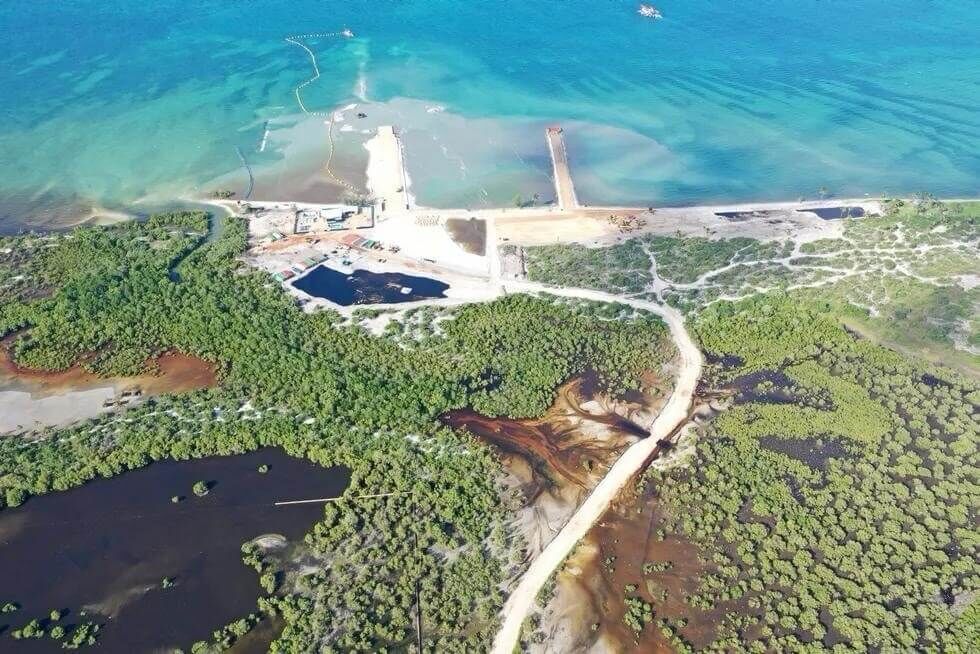
Current events in Mozambique are an example of systematic destruction of the environment and a direct threat to human rights, but also to the lives of people and local communities for the sake of interests of large companies and global corporations, which is also proof that colonialism is still an established practice in the Global South. The financiers of such activities, such as banks and other financial institutions, become their direct accomplices by supporting systematic violence and exploitation.
Center for Environment strongly condemns the endangerment of living space and the denial of basic human rights to people and communities in Mozambique, and for this reason, we convey to our audience a letter from Mozambican civil society organizations, with which we agree and are signatories of.
The letter was written and prepared by Friends of the Earth Mozambique and other civil society organizations of the country, and it was signed by numerous organizations from around the world that are members of Friends of the Earth International, the largest network of environmental organizations in the world, of which the Center for the Environment is a member. The letter sent to many public and private financial institutions is reproduced here in its entirety:
To:
Public financial institutions: Export Import Bank of the United States (US EXIM); Japan Bank for International Cooperation (JBIC); UK Export Finance (UKEF); Export-Import Bank of Thailand (Thai Exim); Servizi Assicurativi del Commercio Estero (SACE); Nippon Export and Investment Insurance (NEXI); Export Credit Insurance Corporation of South Africa (ECIC); Atradius Dutch State Business (ADSB); Cassa Depositi e Prestiti; African Development Bank (AfDB); African Export Import Bank; Development Bank of Southern Africa; Industrial Development Corporation of South Africa; Korea Development Bank; Export Import Bank of Korea (KEXIM); US International Development Finance Corp (DFC).
Private financial institutions: Société Générale; Crédit Agricole; Mizuho Bank; JP Morgan; Standard Chartered Bank; MUFG Bank; Sumitomo Mitsui Banking Corporation; Sumitomo Mitsui Trust Bank; SBI Shinsei Bank; Nippon Life Insurance; ABSA Bank; Nedbank; Rand Merchant Bank; Standard Bank; ICBC.
December 19th, 2024
Urgent call to withdraw financial support for TotalEnergies’ Mozambique LNG project and endorse the call for an independent international investigation into reported human rights violations associated with its Afungi premises
This letter is a follow-up to our letter of a year ago (16 November 2023) in which we outlined why your financial involvement in the TotalEnergies Mozambique LNG project should be reconsidered. Many of the issues and impacts we raised remain unresolved or have worsened.
One year later, regional security and democratic processes in Mozambique have deteriorated, the project was reportedly associated with severe human rights violations, and the Afungi communities whose lives have been disrupted were forced to demonstrate at the gates of the TotalEnergies Afungi site against resettlement violations. This letter details critical new information and sets out what we expect from your financial institution.
Electoral fraud, political assassinations and civil unrest
Mozambique is currently experiencing instability and repression in the midst of its “worst-ever post-election violence”. This situation was ignited in mid October by allegations of electoral fraud and the brutal assassinations of two senior opposition figures. Thousands of people took to the street to demand electoral justice, but peaceful civilian demonstrators faced violent repression from the police and military. Internet restrictions were imposed, violating human rights such as access to information and freedom of speech.
Demonstrations escalated, as did the levels of violence inflicted on civilians. By December 15th 2024, 128 casualties and thousands of injuries were reported, with at least 274 people shot, and about 3,450 people detained in relation to the electoral violence. The UN Office of the High Commissioner for Human Rights (OHCHR) “urged authorities in Mozambique to prevent and immediately stop the violence and repression of journalists, lawyers, human rights defenders and protesters and ensure those responsible are investigated and prosecuted”.
State violence has been evident in the country for years, with death squads murdering civil society leaders, academics, journalists, activists and violently repressing young people who protest. There are also reports of the illegal detention, torture or “disappearance” of journalists who were reporting on the insurgency in the conflict-torn Cabo Delgado province, where the Mozambique LNG project is situated.
The Institute for Security Studies (ISS) warned: “The manipulation of elections by electoral management bodies in favour of the ruling party is crippling democracy, eroding the credibility of institutions and generating post-election violence”. On December 13th 2024, the Mozambique Bar Association raised concerns about the processes being followed to validate the election results, and called for a “recount of the votes or their annulment”.
The electoral demonstrations are a rallying point for youth country-wide to voice their disillusionment with their government, but it must be recognised that the drivers are the same as for the insurgency in Cabo Delgado. Disenfranchisement levels are especially high in the resource-rich north, in a context of long-term socio-economic neglect, and with entire communities required to leave their homes and livelihoods for mega projects such as Mozambique LNG. Significantly, operations of a number of other mega projects across the country have been affected by the protests, including Sasol’s Pande and Temane gas project, Kenmare Resources heavy sands mining, MOZAL aluminium smelter, Safira Mozambique Ceramics, and two gas-fired electricity generators near the Ressano Garcia border post, with disenfranchised protestors putting up road barricades and occupying a shipyard, among other actions. The Syrah Resources’ Balama graphite mine in Cabo Delgado province declared force majeure on 12 December 2024, after sustained demonstrations by farmers since November.
The process to restart the Mozambique LNG project is taking place in this unstable context of extreme nation-wide disillusionment, disenfranchisement, protest and civic repression, developed over years of state repression and corruption.
Reports of human rights violations by public security forces linked to the project
In late September, Politico published an article in which it reported on an alleged massacre of civilians, which was allegedly committed near TotalEnergies’ Afungi premises in mid 2021 by public security forces. These allegations add substantially to the list of accusations of human rights violations linked to the project, research showing inadequate due diligence processes, and court cases and investigations. The 2023 French criminal complaint is now under preliminary investigation by the French Public Prosecutor.
In its article, Politico reported on alleged violations against civilians committed in July-September 2021, three months after the major insurgent attack on Palma town that spurred increased militarisation of the region and resulted in TotalEnergies declaring force majeure on the project. According to Politico, Mozambican troops assaulted civilians who were seeking safety, and imprisoned the men in windowless, metal shipping containers near the entrance of the Mozambique LNG site.
It reports that men – 180 to 250 individuals – were detained for three months, denied water, starved, beaten, suffocated, tortured, stabbed and, finally, most of them “disappeared”. Women were reportedly subjected to repeated sexual assault and humiliation before being released. Only 26 of the prisoners are estimated by the investigation team to have survived. According to the article, the troops involved “ran their detention-and-execution operation from the TotalEnergies’ gatehouse” with the unit leader reported to say that his mission was to protect the “project of Total”.
Between August 2020 and October 2023, TotalEnergies was known to be directly providing food, equipment, accommodation and individual bonuses to the Joint Task Force (JTF) of the Mozambican army, under an agreement that the JTF would “ensure the security of Mozambique LNG project activities in the Afungi site and across the broader area of operations of the project”. A 2023 assessment commissioned by TotalEnergies concluded that this direct link between Mozambique LNG and the Mozambican army “would have the effect […] of making the project a party to the conflict”.
In November 2024, Le Monde and SourceMaterial reported that TotalEnergies was aware that JTF troops were “accused of raping, abducting and killing civilians”. The articles report details from TotalEnergies’ internal reports (13 files, 423 pages) dated between mid-2020 and late 2022, which had been shared with the Italian national development bank Cassa Depositi e Prestiti, and possibly other financial institutions.
According to the article, documents from 2021 reveal that “the community leadership’s biggest concerns were intimidation, extortion, and violence,” and that “residents ‘regularly reported’ human rights violations including torture, detentions and disappearances at the hands of the task force.” The violations also reportedly affected residents of Quitunda resettlement village within the Afungi gas site. It is worth noting that already in 2021, Amnesty International had accused public and private security forces of war crimes relating to other incidents of violence.
In response to Politico, Mozambique’s Ministry of National Defence “categorically regrets and refutes the allegations” and expressed “total openness and willingness to accept a transparent and impartial investigation.” The EU parliament has requested Mozambican authorities to provide “elements of clarification in order to shed light on the events described in the article.”
Mozambique LNG has published a response to the allegations in the Politico article, in which it claims it has not identified any corroborating information, despite maintaining channels of communication with the local communities during that period. The analysis confirms JTF presence at the time: “The facilities on the land dedicated to the projects were protected by a security force composed of soldiers and police officers (Joint Task Force or JTF) whose function was to protect the Afungi peninsula”. The company urged Mozambican authorities to take up the investigation.
This analysis raises critical questions:
Is TotalEnergies’ statement that it has not been informed about the alleged massacre intended at avoiding accountability?
If the Mozambique LNG project, of which TotalEnergies is the operator and largest shareholder, was genuinely unaware of violations reportedly perpetrated by the security forces it was paying, what does this suggest about its competence and its ability to effectively prevent such serious human rights violations?
If the Mozambican government or TotalEnergies lead the investigation into the incidents this would definitively call into question the objectivity and credibility of the results.
Urgent appeal for immediate independent investigation: We are urgently appealing for an immediate independent international investigation into the series of atrocities reportedly committed near the TotalEnergies Mozambique LNG Afungi premises by public security forces reportedly acting in the service of the company. We ask that this independent investigation is conducted by an international or regional intergovernmental human rights mechanism – such as the Office of the United Nations High Commissioner for Human Rights (OHCHR) and the African Commission on Human and Peoples’ Rights – with the intention of ensuring justice and truth for the victims and the safety of survivors, families and witnesses. Working with an internationally or regionally officially recognised human rights body with the required expertise and mandate, is key for the protection of the victims and witnesses.
Resettlement violations in the Afungi gas-affected communities
In a momentous show of courage, the Afungi communities exercised their constitutional right to express their discontent with the gas company’s behaviour regarding the occupation of their lands and compensation payments and agreements. For two weeks in November 2024, villagers, driven by their frustration and desperation, gathered at the Mozambique LNG project from early light, taking direct action in obstructing the entrances. TotalEnergies eventually entered into negotiations with two of the communities, but there is no indication of whether it intends to reach resolution with all affected communities.
Mozambique LNG project is required to adequately compensate families who are affected by resettlement or livelihoods and economic losses as a result of its activities. The resettlement process proved to be complex. Mozambicans have habits and customs that make them inseparable from the land where they were born, and assigning a monetary value to that land is culturally inappropriate and unfair for families. TotalEnergies declared in May 2024 that all compensations had been paid. In June 2024, Mozambican NGO Justiça Ambiental! received over 100 complaints from families seeking assistance around compensation and resettlement matters; and over the past three years, gas-affected families submitted about 1,300 complaints about compensation and 800 complaints about the allocation of fields, many of which remain unresolved. This includes families in the villages of Quitunda, Senga, Mangala, Macala, Maganja, Monjane, and five neighbourhoods of Palma who are seeking resolution regarding the lack of housing, machambas (farmlands) and partial or complete lack of compensation payments.
Families and communities are dynamic (e.g. children become adults and need their own lands for their own families, and many families are polygamous) and the resettlement must be reassessed in light of this as well as the changes in local populations resulting from the conflict. In addition, communication with affected individuals revealed that some sectors of communities were excluded from compensation processes, for example, women who harvest coastal resources, or fishermen who do not have their own boats. Eleven testimonies from affected people, recorded in June 2024, can be viewed here.
For the communities affected, food security is an urgent concern. With machambas taken for the project and fishing access cut off or limited, families are producing and harvesting less food for home consumption and are also no longer earning income from sales. Regional insecurity limits safe access to fields and the coastline. Important cultural practices have not been accommodated, for example the simple matter of protecting mango trees which provide important nutrition in fresh and preserved form throughout the year. The cost of commercial foods is high, and the compensation payments or low-paying jobs cannot make up for a lifetime of livelihood resources. The people affected directly by the project are effectively being forced into poverty.
In conversations with Justiça Ambiental! community members shared that they believe that because the resettlement process has already taken so long, with so many interruptions and unanswered complaints, the process will only come to an end because the communities will be overcome with the fatigue of contesting the irregularities they are being forced to live with.
Continued presence of insurgency in Cabo Delgado
Security in Cabo Delgado remains precarious, with incidents of insurgent activity reported throughout the year. As the election protests escalated in mid October 2024, the Mozambican government moved troops from Cabo Delgado to Maputo city, spurring an increase in insurgent attacks, with escalation over November. One attack close to a Rwandan outpost resulted in the deaths of 12 members of the Namapara militia, a group of Cabo Delgado civilians who are thought to be enlisting local people to fight the insurgency. Insurgents were dispersed in small groups across the province in late November to early December, and seemed to be concentrated on gathering supplies, with one death reported.
In October 2024, over 700,000 war displaced people were still unable to return to their homes, and new waves of violence resulted in new waves of displaced people, although some villages are returning to a degree of normality. Over 600,000 war-displaced people have returned to their villages, but face significant hardships. Education and health services are weakening and humanitarian aid is underfunded. Uprooted people are deprived of homes, fields, wild foods and medicines, and support networks. Many have witnessed or been subjected to brutal violence by the insurgents, and many are experiencing or are vulnerable to gender-based violence and sexual exploitation. There is also distrust in military forces, as explained by the detail that over 13% of the Mozambican army’s engagement in political violence since the start of the conflict was directed against civilians.
The Centre for Democracy and Development (CDD) explains that “the fertilizer” of armed violence in the province, is the poverty, unemployment, despair and social, economic and political exclusion in Cabo Delgado communities. Indications are that recruitment into the insurgency is from a wide geographical base, including East African and Arab countries, but that the insurgents are mainly from northeast Cabo Delgado. According to Observatório do Meio Rural (OMR), extractive projects have not improved living conditions for the people affected. “This situation fuels the belief that the province is rich in natural resources, but that these do not benefit the people”.
Cabo Delgado has seen an increase in militarisation, particularly since 2021, and particularly around the gas project sites, with troops from the Southern African Development Community (SADC), Rwanda, and other countries bolstering the Mozambique army (Forças Armadas de Defesa de Moçambique, FADM). The SADC Mission in Mozambique officially withdrew in mid July 2024, Rwandan forces increased since about May 2024, with a presence of 4,000 reported in September 2024, and a small Tanzanian force is also maintained.
Tanzanian forces are focused on preventing insurgents crossing into Tanzania, while Rwandan forces are concentrated in the Afungi Peninsula and the towns of Palma and Mocímboa da Praia, to protect the Mozambique LNG project. The Namapara militia is also present in some districts. Insurgents are reported to be adapting to the presence of the military, which “risks the spread of the insurgency”, as can be seen by their dispersal to other towns and districts. According to Centro de Integridade Pública (CIP): “This situation is generating ‘islands of security’ in the areas under the influence of LNG projects, where stability can be considered to exist […] while on the periphery insecurity persists”.
OMR warns that, “Military action and advance are important, because they capture territory and limit the initiative of insurgents, but if they are not accompanied by the creation of economic opportunities, youth employment, education, professional technical training and space for dialogue and democratic participation, we will have a situation of prolonged and intermittent armed conflict”.
Will the financiers of Mozambique LNG accept their responsibility?
In 2020, 31 financial institutions including Your financial institution took part in loan agreements, and committed to provide a total of USD 14.9 billion to Mozambique LNG. We, civil society organizations from Mozambique and around the world, are aware that TotalEnergies has been approaching banks and export credit agencies in order to secure their renewed support in view of a lifting of the force majeure. We also know that such renewed support cannot and should not happen without a reassessment of the project.
The financial partners in this project are responsible alongside TotalEnergies for the project’s devastating consequences on Mozambique and the global community. The restart of the project cannot happen without your active support. It is in your hands to ensure justice for the people affected by this project, and for the survivors and witnesses of the reported massacre near the Afungi gas site. The force majeure provides Your financial institution with an opportunity to reconsider its involvement in this project.
Given the evidence summarised above and the high human rights and reputational risks associated with Mozambique LNG:
- we are urging all financiers to endorse the call for an independent international investigation into the alleged massacre of civilians reported to have occurred near the Afungi gas premises in July-September 2021;
- we further urge financiers to withhold any decisions around the continuation or release of any financial support to this project, before all facts and responsibilities are investigated, and the result of such an investigation made public;
- we are warning financiers and all parties linked to the project of the risks of continuing their support for a project that is linked to severe human rights violations against civilians; and
- we are asking all financiers to publicly rule out support for any new gas projects in Mozambique, including Rovuma LNG and Coral North FLNG.
We kindly request an answer to this letter before January 17 2025. We will incorporate the bank’s response in our future communications. We remain available for further discussions with you and your team and will pay close attention to your decision.
Yours sincerely,
Justiça Ambiental! / Friends of the Earth Mozambique
Les Amis de la Terre France / Friends of the Earth France
Reclaim Finance
BankTrack
Urgewald
Friends of the Earth Japan
ReCommon
Milieudefensie / Friends of the Earth Netherlands
Friends of the Earth Europe
Friends of the Earth United States
Solutions for Our Climate