
Concrete steps have not been taken towards suspending the construction of the “Ulog” hydroelectric power plant (HE), terminating concession agreements for the planned projects of the Upper Neretva hydroelectric power plants (HES) “Gornja Neretva,” HE “Glavatičevo,” and HE “Bjelimići,” as well as ensuring adequate protection for the entire Upper Neretva basin. It is necessary for Bosnia and Herzegovina to expedite the processes and permanently protect the upper course of this river, which has been nominated as an Emerald area requiring a suitable protection regime according to international obligations.
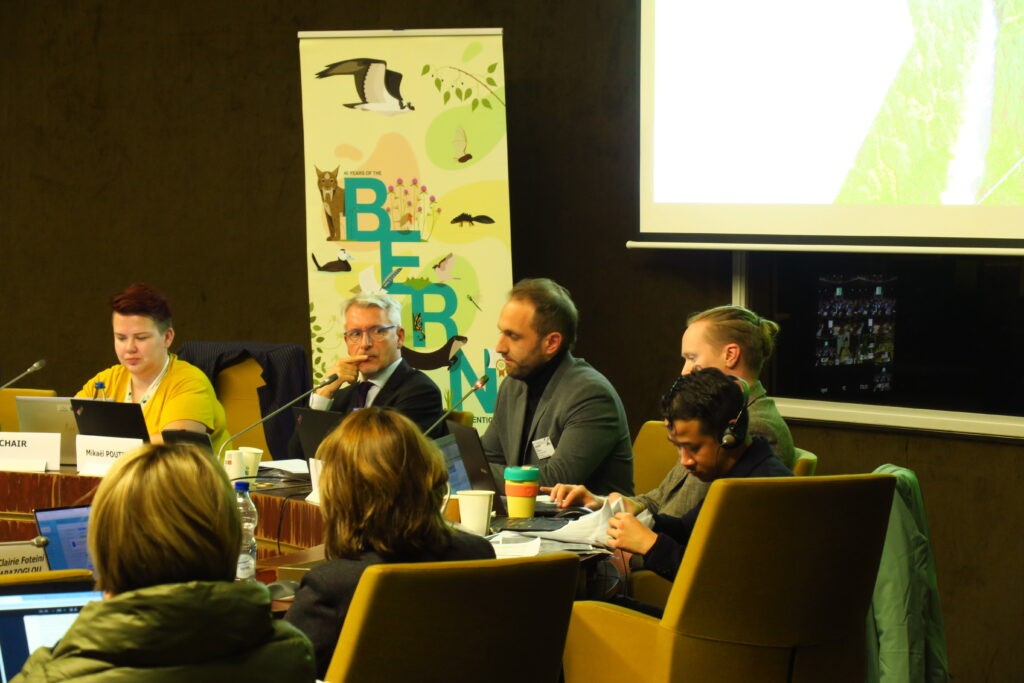
This is the conclusion of the 43rd meeting of the Standing Committee for the Bern Convention at the Council of Europe (hereinafter referred to as the Standing Committee), held from November 27th to December 2nd, 2023, in Strasbourg. The meeting discussed the status of the implementation of Recommendation No. 217 (2022) for Bosnia and Herzegovina, adopted by this body in 2022. The recommendations were adopted after initiating an appeals procedure against Bosnia and Herzegovina regarding the planning and implementation of hydro energy projects in the Upper Neretva basin. They were delivered to the authorities in Bosnia and Herzegovina for implementation in December 2022.
Concrete steps have not been taken towards suspending the construction of the “Ulog” hydroelectric power plant (HE), terminating concession agreements for the planned projects of the Upper Neretva hydroelectric power plants (HES) “Gornja Neretva,” HE “Glavatičevo,” and HE “Bjelimići,” as well as ensuring adequate protection for the entire Upper Neretva basin. It is necessary for Bosnia and Herzegovina to expedite the processes and permanently protect the upper course of this river, which has been nominated as an Emerald area requiring a suitable protection regime according to international obligations.
This is the conclusion of the 43rd meeting of the Standing Committee for the Bern Convention at the Council of Europe (hereinafter referred to as the Standing Committee), held from November 27th to December 2nd, 2023, in Strasbourg. The meeting discussed the status of the implementation of Recommendation No. 217 (2022) for Bosnia and Herzegovina, adopted by this body in 2022. The recommendations were adopted after initiating an appeals procedure against Bosnia and Herzegovina regarding the planning and implementation of hydro energy projects in the Upper Neretva basin. They were delivered to the authorities in Bosnia and Herzegovina for implementation in December 2022.

We recall that the appeals procedure before the Council of Europe was officially opened after an on-the.-spot-appraisal in the Upper Neretva basin in October 2022. Following this, guidelines for the protection and prevention of further degradation of the area were formulated and accepted by the Standing Committee.
At the meeting in Strasbourg, an updated report on the implementation of Recommendation No. 217 (2022) was presented by Redžib Skomorac, Legal advisor at the Center for Environment, on behalf of the consortium of appellants. The report on behalf of the relevant institutions was presented by the focal point for the Bern Convention, appointed by Bosnia and Herzegovina following the initiation of the appeals mechanism.
After the session, the Standing Committee accepted a limited demonstration of the competent entity institutions’ efforts to implement the recommendations. However, in its final decisions, the Standing Committee regretfully noted that concrete steps had not been taken.

During the session dedicated to Bosnia and Herzegovina, Skomorac presented the factual situation, emphasising that despite the clear content of the recommendations, controversial projects had not been suspended. Instead of progress in implementing the recommendations, there had been progress in the implementation of the “Ulog” HE, resulting in significant negative impacts downstream of the project.
In addition, it was pointed out that the Emerald area remained unprotected, and serious negative impacts could be expected if urgent implementation of all recommendations did not take place.
“The Standing Committee, as well as certain delegates, have clearly expressed disagreement with the lack of capacity and willingness of the authorities in Bosnia and Herzegovina to ensure the implementation of urgent recommendations. This is a precondition for bringing the Upper Neretva area under the protection of the Emerald network. This represents an international obligation whose guarantor must be the institutions of Bosnia and Herzegovina. However, the Council of Europe encourages all levels of authorities in Bosnia and Herzegovina to take decisive steps towards the permanent protection of the endangered Emerald area, which extends across the territory of both entities. This is a test for the rule of environmental law in Bosnia and Herzegovina, but also a unique opportunity that requires sober steps from all parties ‘at home,’ which the appellants will insist on,” emphasised Skomorac.
Finally, in addition to urging the maximum acceleration of all processes to protect the endangered area, the Standing Committee specifically called on the authorities in Bosnia and Herzegovina to consult the research results collected during the Neretva Science Week, implemented by the Center for Environment in cooperation with the appellants, for the second time.
“During the previous research on the upper reaches of the Neretva River, including the Science Week, over 1300 species have been discovered. Among them are eight new species for science and 24 new species for Bosnia and Herzegovina. The exceptional water quality, classified as category I, has also been determined. These results prove the high value of this area and indicate the need to prioritise its adequate protection,” stated Jelena Ivanić, coordinator of the Energy and Climate Change program at the Center for Environment.

Nina Kreševljaković, Legal advisor at the Aarhus Center in Bosnia and Herzegovina, added that unfortunately, authorities in Bosnia and Herzegovina are accustomed to populism and a lack of concrete steps when it comes to environmental protection:
“They are convinced that they can ignore the implementation of the recommendations of the Standing Committee without consequences and continue with their plans for the systematic destruction of the Upper Neretva area. However, with strong resistance from activists against such passive behaviour of the authorities, I am confident that the recommendations will be respected.”